In today’s highly competitive engineering landscape, product development cycles are shrinking while design complexity continues to increase. Companies developing aerospace components, medical devices, robotics, and precision industrial equipment are under constant pressure to validate designs faster—without sacrificing accuracy. In this context, 5-axis prototype parts have become a critical enabler of rapid innovation.
Unlike conventional 3-axis machining, 5-axis CNC technology allows complex geometries to be machined in a single setup, significantly improving dimensional accuracy and surface integrity. For engineering-driven manufacturers such as AICHI TECHNOLOGY, 5-axis prototyping is not merely a production method—it is a strategic tool for reducing risk and accelerating time to market.
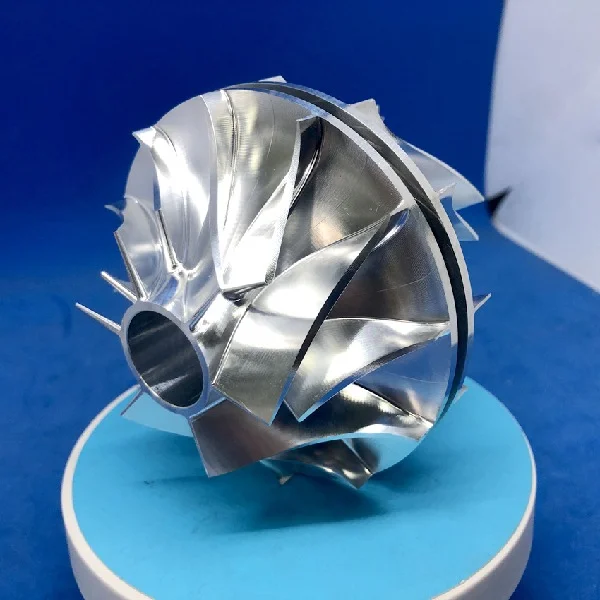
What Defines High-Quality 5-Axis Prototype Parts
Multi-Directional Machining Capability
A true 5-axis machining system simultaneously moves along three linear axes (X, Y, Z) and two rotational axes. This capability enables:
Machining of undercuts and deep cavities
Continuous tool orientation for complex surfaces
Reduced repositioning and fixture changes
As a result, prototype parts more accurately reflect the final production geometry, which is essential for functional testing and validation.
Single-Setup Accuracy and Repeatability
One of the most significant advantages of 5-axis prototype parts is single-clamping machining. Eliminating multiple setups reduces cumulative tolerance stack-up, ensuring superior positional accuracy and consistency—especially critical for mating surfaces and precision assemblies.
Why Engineers Choose 5-Axis Prototype Parts Over Traditional Prototyping Methods
Faster Design Validation Cycles
Traditional prototyping often requires multiple fixtures or secondary operations, extending lead times. With 5-axis machining, complex features can be produced in one operation, allowing engineers to:
Validate form, fit, and function earlier
Identify design flaws before tooling investment
Iterate designs rapidly with minimal rework
This efficiency is particularly valuable in early-stage R&D and pilot production phases.
Superior Surface Finish and Feature Integrity
By maintaining optimal tool orientation throughout the machining process, 5-axis systems reduce tool chatter and uneven cutting forces. The result is enhanced surface quality, which is essential when prototype parts are used for:
Fluid flow testing
Structural analysis
Ergonomic or aesthetic evaluation
Materials Commonly Used in 5-Axis Prototype Parts
High-end 5-axis machining supports a broad range of materials, allowing prototypes to closely match production intent.
Typical materials include:
Aluminum alloys for lightweight structural components
Stainless steel for corrosion-resistant applications
Titanium alloys for aerospace and medical use
Engineering plastics such as PEEK and Delrin
AICHI TECHNOLOGY leverages advanced machining strategies to optimize cutting parameters for each material, ensuring dimensional stability and tool life consistency.
Industry Applications Where 5-Axis Prototype Parts Deliver Maximum Value
Aerospace and Aviation Components
Aerospace designs often involve complex aerodynamic surfaces and tight tolerances. 5-axis prototype parts enable accurate simulation of real-world operating conditions, reducing certification risk later in the program.
Medical Devices and Surgical Instruments
In medical manufacturing, precision and repeatability are non-negotiable. 5-axis prototyping allows intricate features and organic geometries to be machined with minimal deviation, supporting both regulatory documentation and clinical testing.
Robotics and Automation Systems
Robotic joints, housings, and motion components benefit from multi-axis machining due to their complex interfaces and functional surfaces. Prototyping these parts using 5-axis technology improves kinematic accuracy and durability assessment.
Design Considerations for Successful 5-Axis Prototyping
Optimizing CAD Models for 5-Axis Machining
Designing for 5-axis machining requires close collaboration between engineers and machinists. Considerations include:
Tool accessibility and collision avoidance
Feature orientation relative to rotational axes
Consistent wall thickness for structural stability
Experienced manufacturers such as AICHI TECHNOLOGY provide early-stage DFM (Design for Manufacturability) feedback to improve prototype outcomes.
Balancing Tolerances and Cost Efficiency
While 5-axis machining supports extremely tight tolerances, not all prototype features require maximum precision. Strategic tolerance allocation helps control cost without compromising functional validation.
Why AICHI TECHNOLOGY Is a Trusted Partner for 5-Axis Prototype Parts
With a strong focus on precision engineering and advanced CNC capabilities, AICHI TECHNOLOGY supports complex prototyping programs across multiple high-tech industries. Their approach emphasizes:
High-end 5-axis machining centers
Skilled programming and process optimization
Strict dimensional inspection and quality assurance
By aligning prototyping processes with production realities, AICHI TECHNOLOGY enables smoother transitions from prototype to full-scale manufacturing.
Conclusion: Precision Prototyping as a Competitive Advantage
5-axis prototype parts are no longer a niche solution reserved for extreme complexity. They are now a cornerstone of efficient, accurate, and risk-mitigated product development. By enabling rapid validation, superior accuracy, and material realism, 5-axis prototyping empowers engineers to innovate with confidence.
With its expertise in advanced CNC machining and precision manufacturing, AICHI TECHNOLOGY exemplifies the professional standards required to deliver prototype parts that truly support next-generation product development.
https://www.wxaichi.com/5-axis-prototype-parts-engineering-accuracy-without-compromise.html