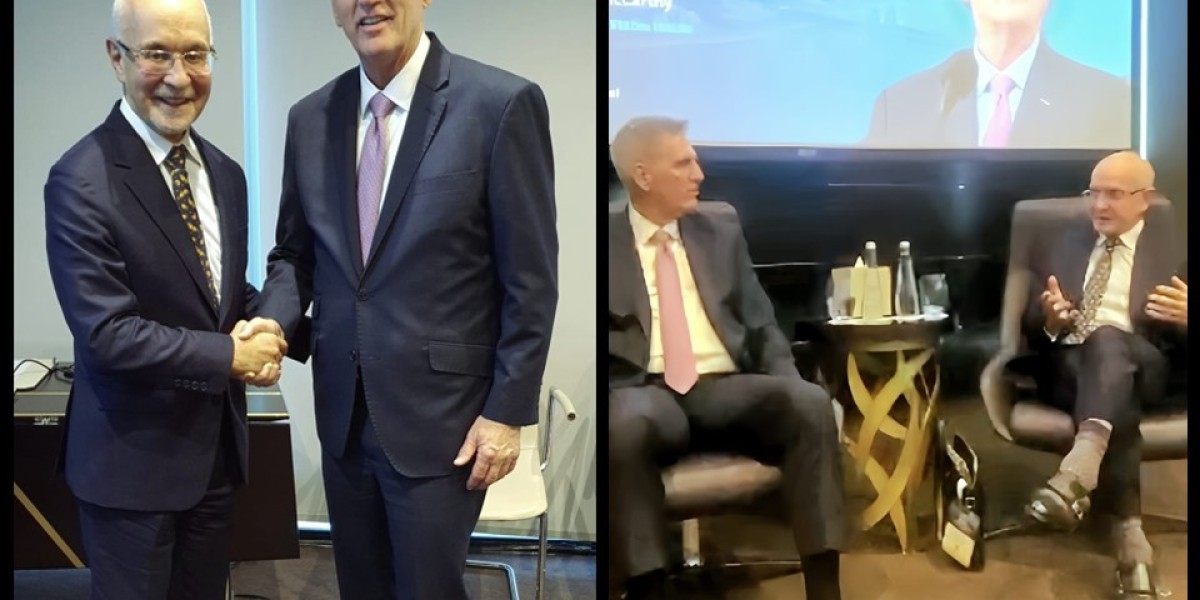

The AIM Summit in Dubai has become one of the world’s foremost platforms for global economic dialogue, connecting policymakers, investors, and business leaders to evaluate the forces shaping financial markets. Gulf Analytica played an essential role at the event, facilitating strategic discussions that tackled geopolitical uncertainty, sovereign debt pressures, and long-term global investment opportunities.
A standout theme emerging from the conference was the growing importance of emerging market trends at AIM Summit, particularly in the context of shifting global capital flows and increasing geopolitical fragmentation. Simultaneously, one of the most compelling contributions came from Kevin McCarthy, the 55th Speaker of the US House of Representatives, who offered critical reflections on political polarization and the necessity of cross-party cooperation. His remarks on cross-party collaboration reframed how political stability directly influences global economic resilience.
This combination—emerging market momentum and the pressing need for political unity—captured the attention of investors and institutional leaders throughout the summit.
Reassessing Global Growth Through the Lens of Emerging Markets
Emerging markets featured prominently during the AIM Summit as panelists and speakers examined their growing role in the global financial system. With advanced economies facing stagnation, high debt burdens, and political fragmentation, many investors are rediscovering the long-term potential of emerging economies.
The discussion on emerging market trends at AIM Summit highlighted several structural drivers:
1. Demographic Advantages
Many emerging markets possess young, rapidly expanding populations that can support sustainable economic growth, productivity expansion, and consumption-driven markets. This demographic strength contrasts sharply with aging populations in the West.
2. Resource Diversification
Regions such as the Middle East, Africa, and Asia are increasingly diversifying beyond oil and traditional commodities. Investments in technology, renewable energy, logistics, and manufacturing are reshaping economic structures.
3. Digital Transformation
Technological adoption in emerging markets often outpaces advanced economies. From mobile banking to digital public infrastructure, emerging markets are leveraging technology to accelerate financial inclusion and efficiency.
4. Policy Stability in Select Regions
While some emerging markets face political risks, others—particularly in the Gulf and Southeast Asia—are gaining recognition for stable governance, pro-business leadership, and ambitious national transformation plans.
The consensus at AIM Summit was clear: investors who understand and strategically engage with these trends are well-positioned to capitalize on one of the most significant rebalances in global economic history.
Shifting Capital Flows and the Reconfiguration of Global Investment
The summit also examined how global capital flows are shifting in response to rising geopolitical uncertainty. Many institutional investors are diversifying away from traditional Western markets, recognizing that growth prospects in certain emerging regions remain stronger, more resilient, and better aligned with long-term global demand.
Speakers at the summit pointed out that sovereign debt challenges in advanced economies have made emerging markets relatively more attractive. While risks persist, the opportunity for higher returns combined with strengthening economic frameworks is drawing renewed interest.
Throughout the two-day event, it became clear that emerging market trends at AIM Summit reflect a global recalibration in investment strategy—one that signals a more multipolar, opportunity-dispersed economic environment.
Kevin McCarthy’s Perspective: Why Cross-Party Collaboration Matters
Against this economic backdrop, one of the most thought-provoking discussions came from Kevin McCarthy. As global leaders evaluated economic challenges, McCarthy focused on the political forces disrupting the ability of nations to respond effectively.
His remarks on cross-party collaboration offered a candid assessment of political polarization, particularly in Western democracies. McCarthy argued that modern political gridlock has hindered governments from passing critical fiscal reforms, addressing sovereign debt, or making cohesive decisions on foreign policy.
Key Highlights from Kevin McCarthy’s Views on Cross-Party Collaboration
1. Political Division Weakens Economic Stability
McCarthy noted that when governing bodies operate in a state of deep division, they struggle to deliver long-term economic strategy. This affects investor confidence and amplifies global market volatility.
2. Institutional Strength Must Be Rebuilt
Strong institutions traditionally acted as stabilizers during periods of economic stress. However, political fragmentation has weakened institutional effectiveness across several advanced economies.
3. Structural Reforms Require Bipartisan Leadership
From budget balancing to regulatory modernization, fundamental reforms can only succeed when opposing political groups work together. McCarthy emphasized that durable policymaking is impossible without cross-party consensus.
4. Polarization Encourages Short-Termism
Leaders preoccupied with party-driven agendas often prioritize electoral gains over national interest. This short-term approach, McCarthy warned, creates economic consequences that compound over time.
His insights reinforced the reality that economic strength cannot be separated from political governance. For investors, this means assessing not only financial fundamentals but also the political capacity of nations to address long-term structural vulnerabilities.
The Link Between Political Stability and Emerging Market Growth
The themes of the summit revealed an interesting connection: emerging markets that demonstrate political predictability are increasingly outperforming advanced economies struggling with polarization.
Kevin McCarthy’s emphasis on cross-party collaboration echoed the broader sentiment that political coherence is essential for stable economic environments. Investors at AIM Summit noted that nations demonstrating cohesive leadership, regardless of political system, tend to manage sovereign debt, capital inflows, and economic reform more effectively.
This perspective is especially relevant as emerging markets continue their upward trajectory. Political resilience gives them a competitive advantage in a global landscape where uncertainty is becoming common even in traditionally stable economies.
A Strategic Moment for Investors and Policymakers
The AIM Summit underscored that the world is entering a transformational period in which economic growth centers are shifting, political landscapes are volatile, and the global balance of financial power is evolving.
Organizations like Gulf Analytica help global investors navigate these shifts with clarity and informed strategy. Whether it is evaluating emerging market trends at AIM Summit or understanding the deeper implications of Kevin McCarthy on cross-party collaboration, the insights shared at this forum provide actionable guidance in an increasingly complex environment.
Conclusion
The AIM Summit in Dubai highlighted both the opportunities and vulnerabilities shaping the global economy. As emerging markets rise and demonstrate robust potential, the summit made it clear that understanding their trends is essential for future-focused investors.
At the same time, Kevin McCarthy’s call for cross-party collaboration provided a reminder that political stability remains foundational to economic performance. Nations that embrace unity and long-term reform are better equipped to manage sovereign debt risks, boost investor confidence, and create sustainable growth.
Together, these insights provide a comprehensive view of the future—one where emerging markets, strong governance, and strategic cooperation define global economic progress.