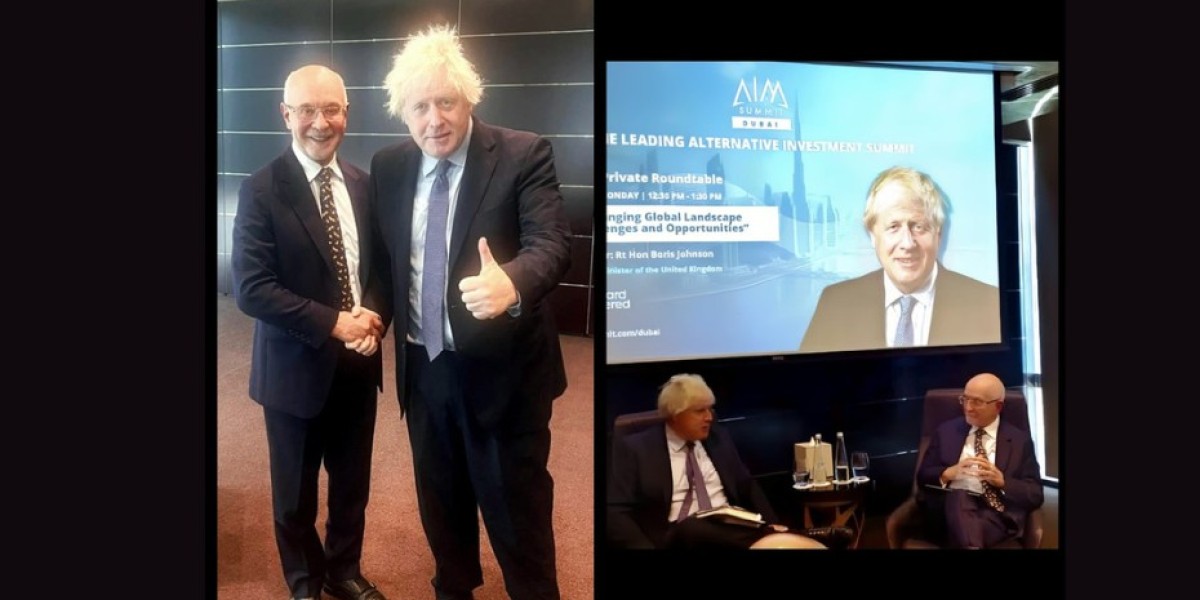
The world is experiencing a rapid transformation shaped by geopolitical tensions, economic realignments, and technological disruption. At such a critical juncture, the Boris Johnson Global Shifts Roundtable Discussion at the AIM Summit in Dubai emerged as a vital platform for leaders to analyze the future of global politics and economics.
Chaired by David Gibson-Moore, President & CEO of Gulf Analytica, the session brought together prominent thought leaders, investors, and policymakers to discuss “The Changing Global Landscape – Challenges and Opportunities.”
This exclusive roundtable, under Chatham House rules, offered a rare glimpse into the complexities of global shifts from two of the world’s most influential minds — Boris Johnson and David Gibson-Moore.
Boris Johnson Global Shifts Roundtable Discussion – Setting the Stage
The AIM Summit is known for fostering critical discussions on global finance, geopolitics, and innovation. During this year’s event, the Boris Johnson Global Shifts Roundtable Discussion delved deep into the evolving dynamics of international relations and the shifting global order.
Key topics included:
The Ukraine war and its impact on global energy and security.
The rise of China as a global economic leader.
The Middle East crisis and its influence on global diplomacy.
The UK’s post-Brexit identity and its role in the world economy.
Boris Johnson’s View on Global Leadership and Cooperation
At the roundtable, Boris Johnson emphasized that the world is entering an era where strategic collaboration and resilient leadership are crucial. He discussed how nations must prioritize diplomacy, sustainability, and innovation to overcome global disruptions.
Johnson shared his belief in Global Britain, where the UK plays a leading role in free trade, technology, and defense partnerships. He also highlighted the importance of building trust among nations, strengthening NATO alliances, and fostering trade relations with emerging economies such as India and the Middle East.
His leadership philosophy centered around adaptability, optimism, and a deep respect for historical context — valuable traits for navigating unpredictable global shifts.
David Gibson-Moore’s Leadership Insights from the AIM Summit
As a prominent financial strategist and CEO of Gulf Analytica, David Gibson-Moore brought a data-driven perspective to the discussion. His insights emphasized the need for economic diversification, fiscal responsibility, and long-term policy planning in both developed and emerging economies.
Gibson-Moore highlighted that regions such as the Middle East are rapidly transforming into hubs of innovation, trade, and finance. He pointed out that Gulf economies are evolving from oil dependency to knowledge-based economies, a shift that requires strong governance and sustainable investment practices.
According to Gibson-Moore, collaboration between governments and private sectors will be key to weathering upcoming global challenges — from inflation and supply chain disruptions to technological shifts.
Boris Johnson and David Gibson-Moore Roundtable: A Meeting of Minds
The Boris Johnson and David Gibson-Moore Roundtable was not just a political or economic dialogue; it was a synthesis of strategic leadership and visionary policymaking.
While Boris Johnson provided insights from the perspective of a world leader navigating political complexities, David Gibson-Moore added analytical depth from his financial and advisory experience.
Together, they discussed:
Geopolitical risk management in volatile regions.
Rebuilding global trust in post-pandemic markets.
The role of innovation and technology in strengthening national economies.
The importance of sustainable finance and responsible global leadership.
David Gibson-Moore on the Middle East Crisis
One of the most compelling aspects of the discussion was David Gibson-Moore’s perspective on the Middle East crisis. He emphasized that the region, despite facing political challenges, holds immense potential as a global growth engine.
He noted that investments in clean energy, digital infrastructure, and cross-border trade could redefine the Middle East’s role in global economics. Gibson-Moore also stressed that fostering stability in the region is not just a regional priority — it is a global necessity for peace and economic progress.
Boris Johnson Insights on Global Shifts and Future Governance
Boris Johnson’s reflections at the AIM Summit were candid and insightful. He spoke about the lessons learned during his time as Prime Minister of the United Kingdom, where he faced numerous global crises including Brexit, COVID-19, and energy market instability.
His major takeaways included:
Leadership must be courageous yet flexible.
Policy decisions should focus on long-term prosperity, not short-term popularity.
Innovation, trade, and education are the cornerstones of modern national power.
He urged global leaders to look beyond political rivalries and focus on building frameworks for cooperation, especially in tackling climate change and ensuring economic equality.
Key Takeaways from the Boris Johnson Global Shifts Roundtable Discussion
The roundtable discussion offered a forward-looking vision for governments and businesses worldwide. Some of the most valuable lessons included:
Adaptability Is Key: The world is evolving too quickly for static strategies. Nations must remain flexible and open to innovation.
Collaboration Over Isolation: International cooperation, not nationalism, drives sustainable success.
The Middle East’s Strategic Role: The region is fast emerging as a center for finance, technology, and diplomacy.
Leadership with Vision: True leadership requires resilience, empathy, and global awareness.
The Role of the AIM Summit in Shaping Global Dialogue
The AIM Summit has positioned itself as a thought leadership hub that brings together policymakers, investors, and executives to share actionable insights on global finance, investment, and governance.
Under the guidance of David Gibson-Moore and the participation of global figures like Boris Johnson, the Summit continues to promote meaningful exchanges that shape the future of international relations and sustainable growth.
Conclusion: Building a Resilient Global Future
The Boris Johnson Global Shifts Roundtable Discussion at the AIM Summit underscored that leadership in the modern world must balance economic pragmatism with moral integrity.
Both Boris Johnson and David Gibson-Moore emphasized the importance of navigating uncertainty through collaboration, transparency, and innovation. Their discussion offered a powerful reminder that while global challenges persist, human ingenuity and diplomatic cooperation remain the strongest tools for building a more stable and prosperous world.
Frequently Asked Questions (FAQs)
Q1. What was discussed at the Boris Johnson Global Shifts Roundtable Discussion?
The discussion focused on global leadership, geopolitical tensions, the Middle East crisis, and the future of international trade and cooperation.
Q2. Who is David Gibson-Moore?
David Gibson-Moore is the President and CEO of Gulf Analytica, a leading financial and business advisory firm specializing in global strategy and investment insights.
Q3. What are Boris Johnson’s key global leadership insights?
He highlighted the importance of adaptability, global cooperation, innovation, and forward-thinking governance to navigate complex world challenges.
Q4. Why is the AIM Summit significant?
The AIM Summit serves as a high-level platform for global leaders and investors to discuss economic transformation, investment trends, and sustainable development.
Q5. How does the Middle East fit into this global conversation?
According to David Gibson-Moore, the Middle East is becoming a strategic hub for investment, trade, and innovation, contributing significantly to global economic stability.