
In today’s world of heightened political division, polarization, and competing ideologies, collaboration across party lines has become both a challenge and a necessity.
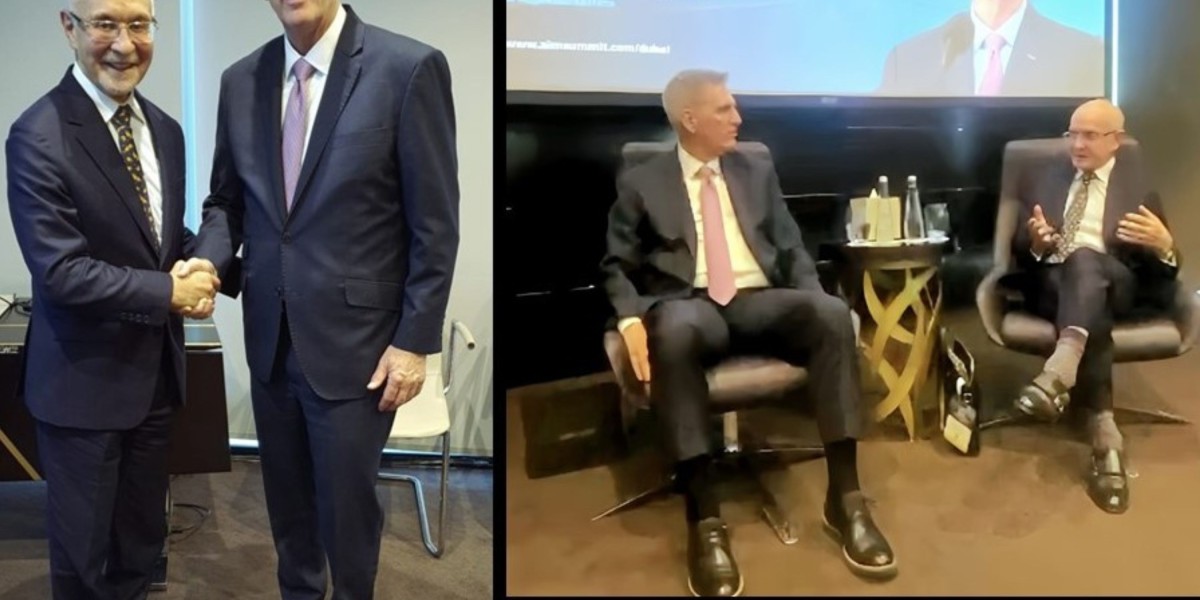
At the AIM Summit Dubai, former U.S. House Speaker Kevin McCarthy brought a unique perspective to the global leadership discussion — emphasizing that sustainable progress, both politically and economically, relies on cross-party collaboration.
Through his years in American politics and international engagement, McCarthy has witnessed firsthand how unity of purpose — even among ideological differences — can create stability, foster innovation, and drive growth. His insights offer a blueprint for global leaders navigating the complexities of governance in a multipolar world.
AIM Summit Dubai: A Platform for Political and Economic Dialogue
The AIM Summit has emerged as a premier gathering for leaders seeking to bridge global divides — not just in finance, but in governance, diplomacy, and social cohesion.
McCarthy’s participation added a political dimension to the discussions, connecting the dots between policy collaboration and economic progress.
He argued that cross-party cooperation is essential to maintain trust in democratic institutions and sustain long-term economic stability.
In his words, “Economic resilience cannot exist in the absence of political unity.”
Dubai, a city known for its inclusive leadership and forward-thinking policies, provided the ideal backdrop for these reflections — a global hub where East meets West, and collaboration fuels progress.
The Case for Cross-Party Collaboration
McCarthy’s message at the AIM Summit Dubai was rooted in a simple truth: progress cannot happen in isolation.
He stressed that in an era of global interdependence, domestic political divides can have far-reaching international consequences — affecting trade, security, and global economic recovery.
He outlined several key benefits of cross-party collaboration:
Policy Stability: Bipartisan consensus ensures long-term consistency in national and economic strategies.
Investor Confidence: Political stability attracts investment and strengthens financial systems.
Social Unity: Collaboration sends a message of inclusion, reducing polarization among citizens.
Global Credibility: Nations that demonstrate unity gain influence and respect on the international stage.
This principle, McCarthy argued, applies not only to the U.S. but to emerging democracies worldwide striving for institutional maturity.
Lessons from the U.S. Political Landscape
As the former Speaker of the U.S. House of Representatives, McCarthy’s political journey is defined by navigating complex coalitions.
His experiences offer valuable lessons on the art of negotiation, strategic compromise, and the balance between principles and progress.
At the AIM Summit, he discussed how bipartisan dialogue — even when difficult — can unlock transformative policy outcomes.
He noted, “Leadership is not about winning every debate; it’s about finding common ground where progress becomes possible.”
McCarthy’s approach resonates globally, especially for nations balancing diverse political interests, regional identities, and economic priorities.
Collaboration as a Tool for Economic Growth
A key theme of McCarthy’s remarks was the direct link between political cooperation and economic prosperity.
He emphasized that governments capable of reaching across divides are better equipped to implement reforms, attract investors, and foster innovation.
For instance, bipartisan support is crucial for policies in:
Infrastructure development
Tax and fiscal reform
Trade agreements
Sustainability initiatives
When parties work together, the private sector gains clarity and confidence — driving entrepreneurship and long-term economic growth.
McCarthy illustrated that this synergy between policy and business is essential for both advanced and emerging economies.
A Global Need for Political Dialogue
Beyond the U.S., McCarthy’s message resonated with leaders from Africa, Asia, and the Middle East attending the AIM Summit.
He noted that cross-party collaboration is not a Western concept — it’s a universal principle of governance.
Countries facing political fragmentation or regional conflicts can only achieve stability through dialogue and shared goals.
Dubai’s governance model — emphasizing inclusivity, pragmatism, and vision — served as a case study for balancing diverse perspectives while pursuing collective progress.
McCarthy praised Dubai’s ability to maintain social harmony amid cultural diversity, calling it a “living example of policy collaboration in action.”
The Role of Leadership in Bridging Divides
Throughout his session, McCarthy emphasized that true leadership lies in the ability to listen.
He shared that great leaders don’t just enforce their vision — they create space for others to contribute, debate, and co-create solutions.
According to him, cross-party collaboration requires:
Empathy over ego – Understanding opposing perspectives instead of dismissing them.
Long-term vision – Prioritizing the nation’s or institution’s success over short-term victories.
Transparent communication – Building trust through honesty and accountability.
Institutional respect – Protecting the democratic framework that allows multiple voices to coexist.
By embedding these values in political and corporate leadership, McCarthy believes nations can overcome polarization and unlock shared prosperity.
Geopolitics and the Spirit of Cooperation
McCarthy also extended the idea of cross-party collaboration beyond national borders.
In an increasingly multipolar world, where geopolitical tensions often define policy, he urged nations to embrace cross-national collaboration to tackle shared global challenges — from climate change and trade imbalances to technological regulation and migration.
He stated that economic diplomacy — grounded in trust and dialogue — can serve as the new form of “cross-party collaboration” on a global scale.
At the AIM Summit Dubai, this approach found strong resonance, as participants from across continents discussed collective solutions to shared problems.
Challenges to Cross-Party Collaboration
While McCarthy acknowledged the benefits of collaboration, he also addressed its obstacles — especially the rise of populism, misinformation, and partisan media.
He warned that modern politics often rewards confrontation over cooperation, making it harder for leaders to build consensus.
However, he offered hope through innovation and citizen engagement.
By leveraging technology for transparency and civic participation, democracies can rebuild trust between governments and citizens — the foundation of any successful cross-party initiative.
The Future of Governance and Global Stability
McCarthy’s insights at the AIM Summit Dubai pointed to a crucial takeaway: the next phase of global leadership will depend on collaboration, not confrontation.
He urged policymakers to move beyond political labels and focus on solutions that unify rather than divide.
His speech aligned with the Summit’s broader theme — fostering resilience and shared prosperity through cooperation.
Dubai’s example as a global hub for diplomacy and dialogue symbolized how inclusive governance can serve as a blueprint for others.
Conclusion: Collaboration as the Cornerstone of Progress
Kevin McCarthy’s perspective on cross-party collaboration transcends traditional politics — it’s a call to action for leaders, businesses, and institutions worldwide.
At the AIM Summit Dubai, his message was clear: the challenges of our time — from debt and inflation to inequality and climate change — require shared vision, not isolated effort.
By championing unity, transparency, and empathy, McCarthy illustrated how nations can strengthen democracy, stabilize economies, and secure a prosperous future for all.
As he concluded, “History remembers not those who argued the loudest, but those who built bridges that lasted generations.”